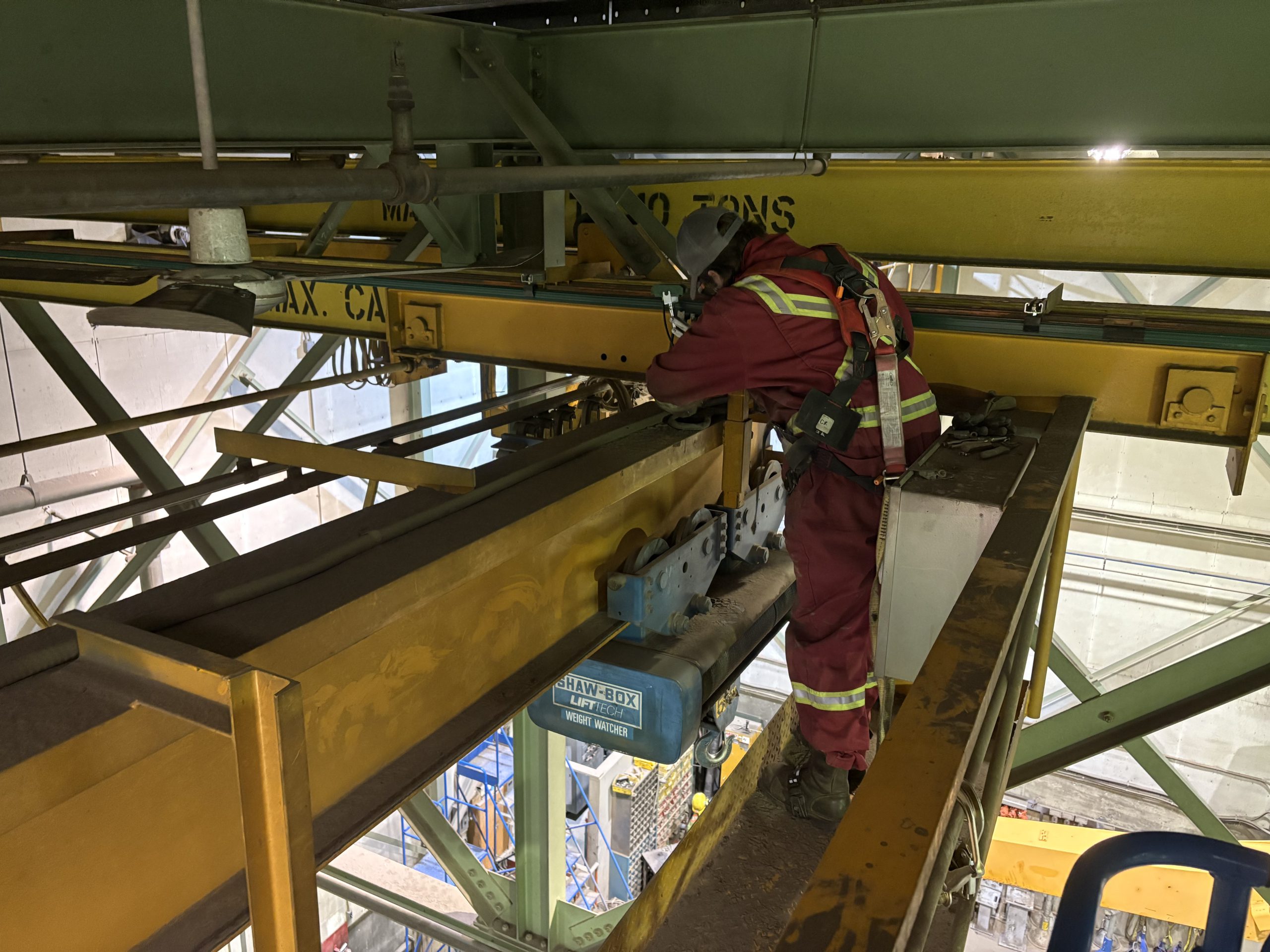

In Alberta, cranes don’t just operate in “cold weather.”
They operate in deep freezes, heavy snow, ice buildup, wind, and rapid temperature swings.
If your overhead crane, gantry crane, or jib crane operates outdoors or in a partially exposed structure, weather directly affects performance, safety, and lifespan.
Here’s what that means for your equipment.
❄️ 1. Cold Temperatures Impact Hoists, Gearboxes & Brakes
Extreme cold changes how mechanical components perform:
-
Lubricants thicken
-
Gear oil viscosity shifts
-
Bearings experience higher resistance
-
Brake response time slows
-
Motors draw higher amperage at startup
This can lead to:
-
Jerky bridge or trolley movement
-
Reduced lifting performance
-
Increased wear on gearboxes
-
Premature brake failure
Best practice:
Seasonal lubrication review and pre-winter inspection for all outdoor crane systems.
At Overhead Crane Solutions Inc., many winter breakdowns we respond to could have been prevented with proactive maintenance.
🧊 2. Ice & Snow Create Tracking and Safety Issues
For overhead and gantry cranes running on exposed rails, ice can build up on:
-
Runway rails
-
End stops
-
Trolley wheels
-
Festoon systems
-
Limit switches
Jib cranes may experience ice buildup around pivot points and structural connections.
Ice buildup can cause:
-
Tracking problems
-
Uneven wheel wear
-
Brake interference
-
Electrical faults
-
Increased load instability
Operating with visible ice significantly increases safety risk.
Recommendation:
-
Clear rails and travel paths before operation
-
Inspect trolley wheels and rotation points
-
Avoid lifting until ice is removed
🌬 3. Wind Increases Load Swing & Structural Stress
Outdoor gantry and jib cranes are especially exposed to wind.
Wind can:
-
Increase load sway
-
Add lateral stress to structural members
-
Overload anchor bolts
-
Shift gantry alignment on rails
For overhead cranes in open buildings, wind entering large doorways can still affect load stability.
Operators should:
-
Reduce lift speed during high wind
-
Avoid long suspended loads in gusting conditions
-
Follow site wind shutdown policies
🌡 4. Temperature Swings Cause Expansion & Electrical Issues
Alberta frequently shifts from extreme cold to milder temperatures within days.
These swings cause:
-
Metal expansion and contraction
-
Loose hardware
-
Condensation inside electrical panels
-
Cracked insulation or seals
Over time, this contributes to:
-
Control faults
-
Intermittent shutdowns
-
Corrosion on structural components
Seasonal inspections should always include a full electrical review.
🛠 5. Spring Startup Inspections Are Critical
After winter exposure, overhead, gantry, and jib cranes should undergo:
-
Brake function testing
-
Wire rope inspection
-
Structural weld review
-
Electrical enclosure inspection
-
Trolley and bridge alignment check
-
Anchor bolt inspection (for gantry and jib systems)
Many spring failures are winter-related damage that went unnoticed.
Seasonal Maintenance Protects Your Equipment & Your Compliance
Weather-related wear is predictable in Alberta.
Outdoor crane systems should follow:
-
Pre-winter inspection
-
Mid-season check
-
Post-winter evaluation
Preventative service costs significantly less than emergency downtime, failed inspections, or safety incidents.
Need a Seasonal Crane Assessment?
If your overhead, gantry, or jib crane operates outdoors or in a partially exposed structure, a seasonal review helps ensure safety, compliance, and operational reliability.
📞 780-482-7263
🌐 www.overheadcranesolutions.com
Overhead Crane Solutions Inc. helps Alberta facilities stay safe and operational — no matter the season.