
Choosing the right hoist for your facility is an important decision that affects productivity, safety, maintenance requirements, and long-term operating costs. Two of the most common options are wire rope hoists and chain hoists — but each is designed for different applications and operating environments.
Understanding the differences between the two can help facility managers, maintenance teams, and business owners select the best solution for their lifting needs.
In this article, we’ll compare wire rope hoists and chain hoists, including their advantages, limitations, and ideal applications.
What Is a Wire Rope Hoist?
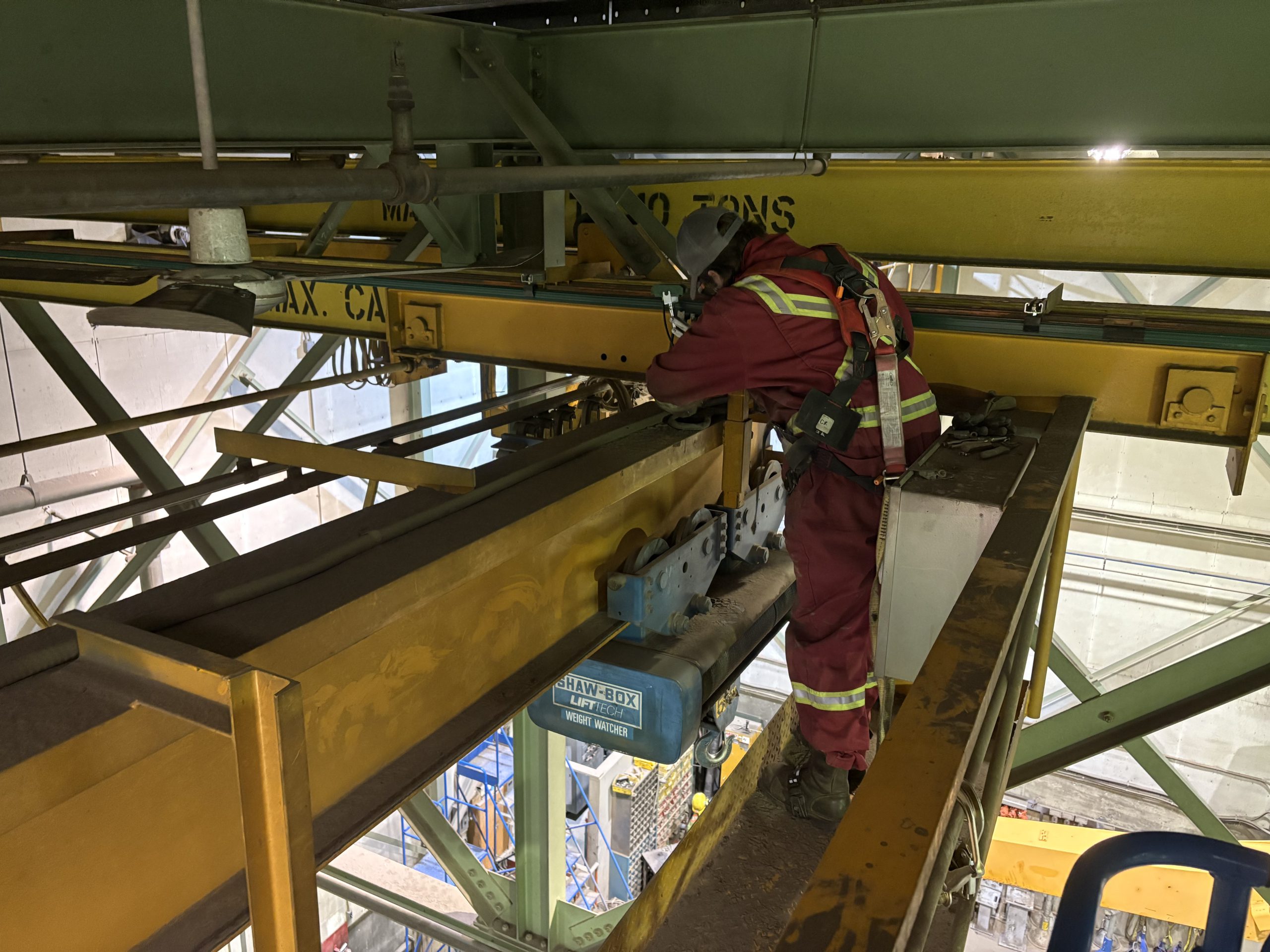
A wire rope hoist uses a steel wire rope wrapped around a drum to lift and lower loads. These hoists are commonly used in heavy-duty industrial applications where higher lifting capacities and faster lifting speeds are required.
Wire rope hoists are often found in:
- Manufacturing facilities
- Steel plants
- Heavy fabrication shops
- Oil and gas operations
- Large warehouses
They are typically paired with overhead bridge cranes for demanding lifting operations.
What Is a Chain Hoist?
A chain hoist uses a chain mechanism to raise and lower loads. Chain hoists are available in both manual and electric models and are commonly used for lighter-duty applications.
Chain hoists are frequently used in:
- Automotive shops
- Maintenance facilities
- Small fabrication shops
- Warehouses
- Agricultural operations
Their compact size and versatility make them ideal for applications with lower lifting capacities and less frequent use.
Key Differences Between Wire Rope and Chain Hoists
1. Lifting Capacity
Wire Rope Hoists
Wire rope hoists are designed for heavier lifting applications and can handle significantly larger load capacities.
They are ideal for:
- Heavy industrial operations
- Continuous production environments
- High-capacity lifting requirements
Chain Hoists
Chain hoists are generally better suited for lighter loads and lower-capacity lifting tasks.
They are commonly used for:
- Occasional lifting
- Maintenance work
- Small equipment handling
2. Lifting Speed and Performance
Wire Rope Hoists
Wire rope hoists typically offer:
- Faster lifting speeds
- Smoother operation
- Greater lifting height capabilities
This makes them well suited for facilities where productivity and efficiency are critical.
Chain Hoists
Chain hoists generally operate at slower lifting speeds and are better suited for precision lifting or intermittent use.
3. Durability and Duty Cycle
Wire Rope Hoists
Wire rope hoists are built for demanding industrial environments and frequent use. They are designed to handle higher duty cycles and continuous operation.
Chain Hoists
Chain hoists are durable but are typically intended for lighter-duty applications and lower operating frequencies.
4. Maintenance Requirements
Wire Rope Hoists
Wire rope systems require regular inspections and maintenance, including:
- Rope condition monitoring
- Drum inspections
- Lubrication
- Alignment checks
Because they are more complex systems, maintenance costs can be higher.
Chain Hoists
Chain hoists are generally simpler and easier to maintain. Their compact design often results in lower maintenance requirements and reduced repair costs.
5. Precision and Load Control
Wire Rope Hoists
Wire rope hoists offer smoother lifting motion and improved load positioning for larger or delicate loads.
Chain Hoists
Chain hoists can provide excellent control for slower, precise lifting tasks, especially in maintenance environments.
6. Cost Considerations
Wire Rope Hoists
Wire rope hoists generally involve:
- Higher upfront costs
- More advanced installation requirements
- Increased maintenance expenses
However, they often provide greater long-term value in demanding industrial settings.
Chain Hoists
Chain hoists are usually:
- More affordable
- Easier to install
- Cost-effective for smaller operations
Which Hoist Is Right for Your Facility?
The right hoist depends on several factors, including:
- Load capacity requirements
- Frequency of use
- Lifting height
- Available space
- Budget
- Operating environment
Wire Rope Hoists Are Best For:
- Heavy-duty industrial applications
- High-capacity lifting
- Continuous operation
- Faster lifting speeds
- Long lifting heights
Chain Hoists Are Best For:
- Light to moderate lifting
- Maintenance applications
- Smaller facilities
- Lower-duty cycles
- Cost-sensitive operations
Find the Right Hoist Solution for Your Operation
At Overhead Crane Solutions, we help facilities across Alberta select, install, inspect, and maintain lifting equipment designed for their unique operational needs. Whether you need a heavy-duty wire rope hoist or a versatile chain hoist solution, our team can help you choose the right equipment for safety, performance, and long-term reliability.